Tech
ISRO: The Leading Frontier in Space
Indian Space Research Organization has been steadily building its launching and exploration capabilities for decades. Roots of ISRO stretch back to 1962, first PM enlisted physicist Vikram Sarabhai to set up organization, Sarabhai is known as the founding father of India’s space program because of efforts taken by him along with the another exceptionally remarkable legendary personality Dr. APJ Abdul Kalam sir. Undoubtedly, they pioneered the organization.
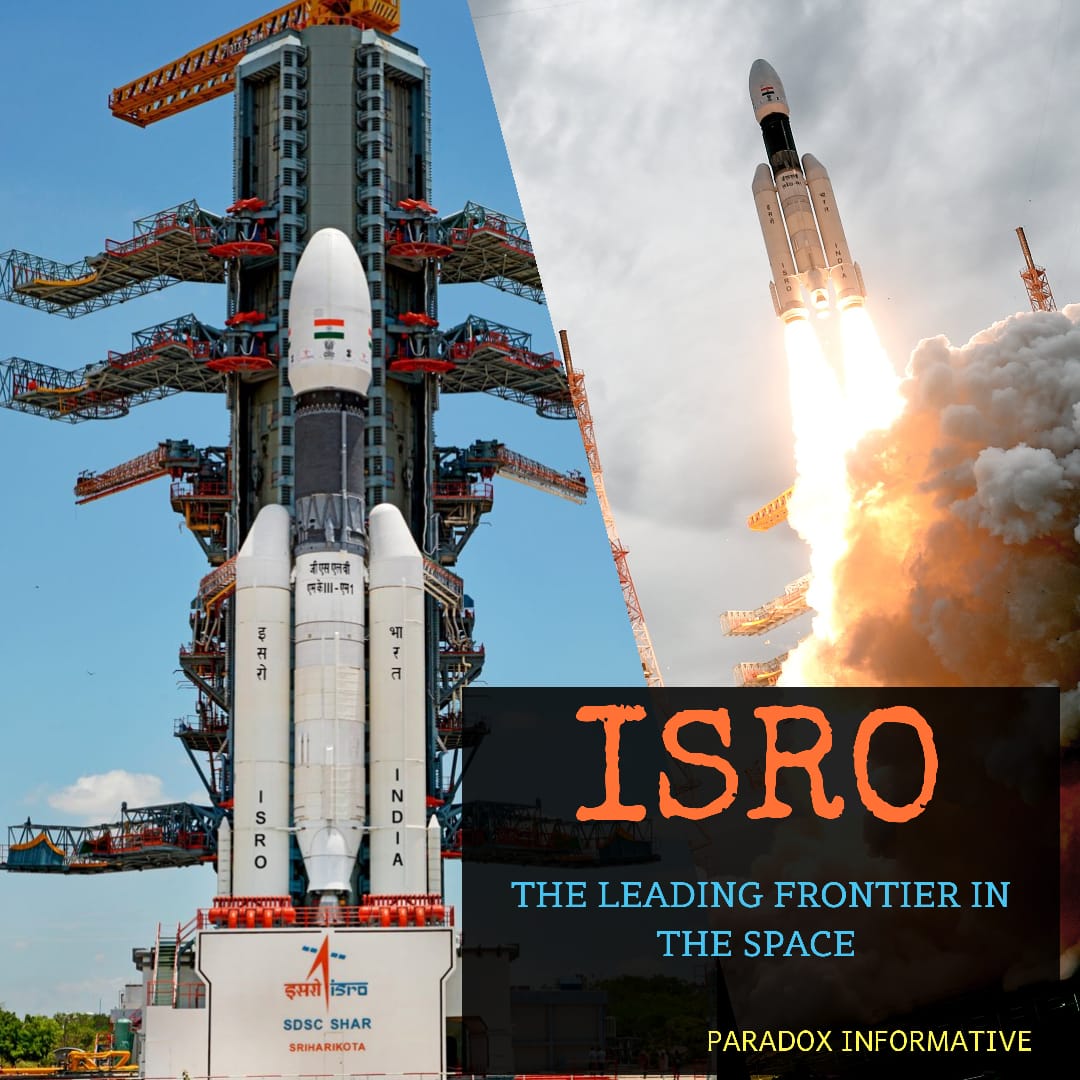
Transporting components and payloads of rocket to the launch site by bicycle, setting up the mission control room into a church in village of Thiruvananthapuram, Kerala to building one of the biggest rocket in the world, GSLV mk3, isro has came a very long way.
1. The first rocket launch flew from Saint Mary Magadalene Church in the fishing village of Thumbi, Thiruvananthapuram, Kerala on Nov. 21, 1963. The sounding rocket, which only reached sub-orbital space, was called Nike-Apache whose components were built by NASA.


2. Six years later in 1969, India launched first satellite, called Aryabhata, into orbit aboard a Soviet rocket. It was named for an ancient Indian astronomer, Aryabhata conducted several experiments in X-ray astronomy and solar physics.
3. In 1979, Isro successfully conducted the first test on our own homemade orbital rocket, the Satellite Launch Vehicle-3 (SLV-3). The four stage vehicle which is capable of carrying 40KG of payloads into orbit. After its successful launch on July 18, 1980, India became the sixth nation to achieve spaceflight. SLV-3 carried the Rohini-1 satellite into orbit.

4. Subsequently, isro developed two other types of rocket. Polar Satellite Launch Vehicle (PSLV), for launching satellites into polar orbit and the Geosynchronous Satellite Launch Vehicle (GSLV) for placing satellites in geostationary orbits. These rocket beasts have launched numerous communications satellites and earth observation satellites including satellite navigation systems like GAGAN and IRNSS have been deployed. Isro also used an indigenous cryogenic engine, CE-7.5 in GSLV-D5 for the launch of GSAT-14.

5. Remarkable mission, in which Isro sent lunar orbiter Chandrayaan-1 on 22 Oct. 2008 to the Moon. The probe was about the size of refrigerator, helped discover the evidences of water molecules in the form of ice on moon for the first time.

6. Five years later, in 2014, Irso flew the Mars Orbiter Mission, nicknamed Mangalyaan, to the Mars. On Sept. 24, 2014, vehicle successfully reached Mars, making India the first nation to succeed on its maiden attempt and just the Fourth entity to place a spacecraft in Martian orbit. The mission was completed at a record-low cost of just 450 crore($74 million) which way less than cost of hollywood movie “The Martian” ($108 million). This is ISRO for you, efficient and economical.

7. On Feb 15, 2017, Isro set up a world record by launching 104 satellites in a single rocket which was PSLV-C37. On June 5, 2017, Isro launched its heaviest beast, GSLV- MARK III and successfully placed a communication satellite GSAT-19 in orbit. With this endeavour, Isro became a capable of launching 4 ton heavy satellites in GTO.

8. On July 22, 2019, Isro launched second lunar probe Chandrayaan-2. The probe successfully reached in lunar orbit but lander Vikram lost contact as it was just 2.1 KM above the lunar surface. Despite the apparent crash landing of the lander, the whole orbiter is working well and helping scientist to study. The lander part was just 5% of the whole mission.

9. Isro is now gearing up to send humans into space using their own rockets. Isro’s human spaceflight program named as Gaganyaan mission. It would be launched in year 2022, when India will celebrating the 75th year of independence. The proud moment for every Indian on the globe.


-

 Entertainment6 years ago
Disha Patani is a National crush and Why?
-

 Paradox recommends6 years ago
WAJID KHAN song list forever in heart and on the playlist
-

 Interview6 years ago
Madhura Joshi Divekar tells us her story, passion and more.
-

 Entertainment5 years ago
Best bollywood villains of 90s and the iconic actors.
-

 Food6 years ago
Terrace Farming- A clever way to grow greens.
-

 Interview5 years ago
Tirth Parsana: one who gives a laughter pill
-
 Business6 years ago
Elon Musk : undaunted visionary character shaping our future
-

 Paradox recommends6 years ago
Top webseries you must watch.
-

 Fashion6 years ago
SABYASACHI LEHENGA : A dream of every girl.
-

 influencer stories5 years ago
Neha Kulkarni who does Nasti Uthathev!