education
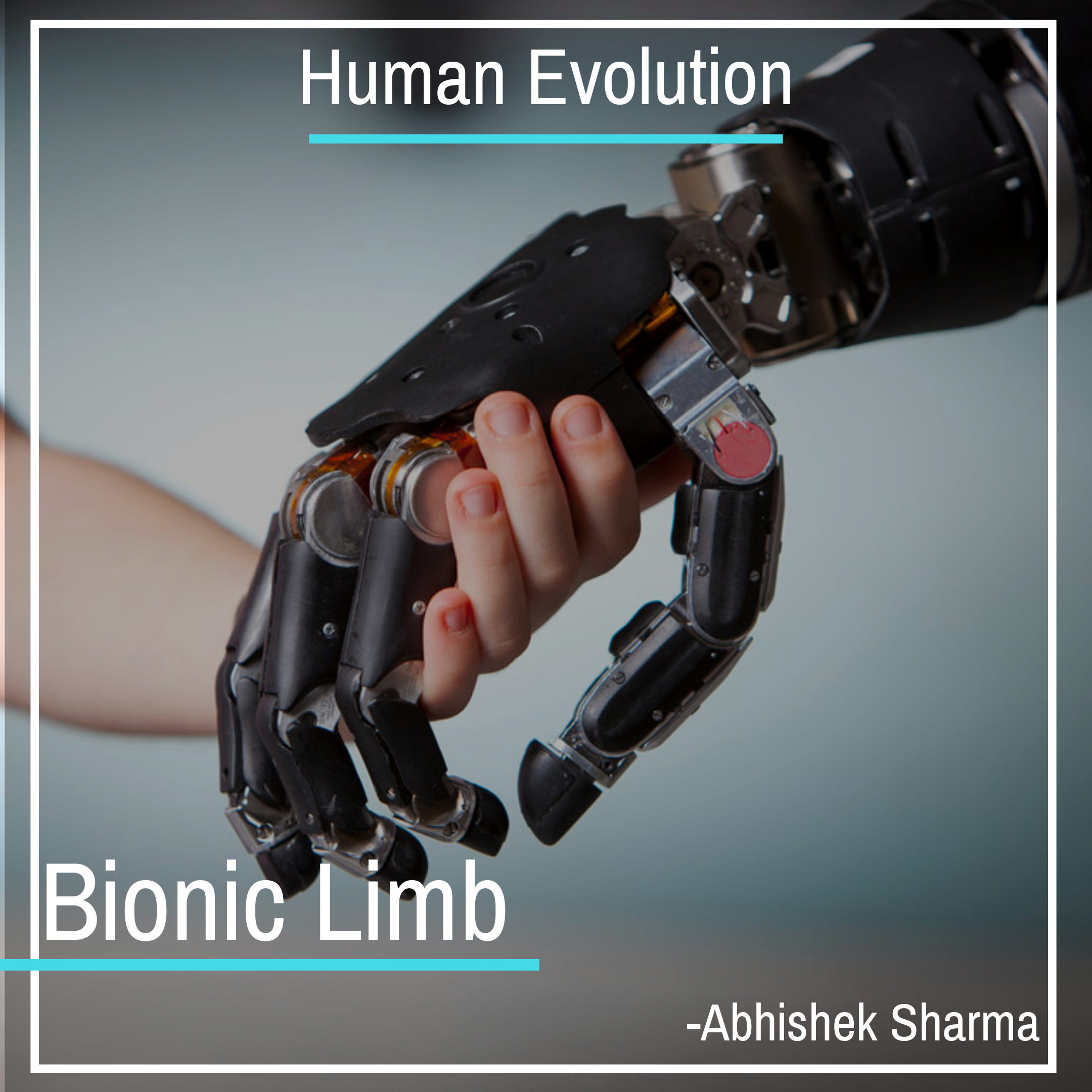
Human Evolution: Bionic Limb
Modern advances in the field of prosthetics are changing the lives of the disabled all across the globe. Bionic technology is rapidly growing since the 2000s, with changing the view of how humans can look like? From Rigid prosthetics to modular prosthetics, this technology has come a way long to combine human to machine. Bionic technology is the application of biological methods and systems found in nature that inspire engineering to make a replica of these methods artificially. And today let’s understand more about, most common prosthetic ‘Bionic Limbs’.
Bionic limbs are artificially designed limbs (like hands and legs) that help a physically disabled human to perform a motor function like walking, grabbing a ball, etc. These limbs use motor sensors or myo-electronics that capture and convert muscle signals to electrical signal helping to move the prosthetic attached. Being a very useful technology bionic limbs are still unavailable for common people due to high price.
But thanks to the revolution in 3-D printing, Callum miller made the first 3-D printed prosthetic for his son Jamie which took over 18 months at his home. After building the 3-D printed prosthetic Callum is looking for a new approach to add myo-electronics in the prosthetic to have better motion. The problem with these prosthetics is the patient wearing it lacks a sense of touch. The patient couldn’t feel his prosthetic arm as part of his body.

John Hopkins University Applied Physics Laboratory situated in Baltimore, Maryland has become an incubator for the new emerging bionic technology that is pushing the limits of human-machine interfaces. It all started in 2005 when DARPA (Defence Advanced Research Programme Agency) initiated a program to take prosthetics to a whole new level. Engineers at this laboratory have developed a Modular Prosthetic Limb (MPL) a bionic arm that responds to human thoughts. The MPL interprets and converts signals from the body’s nervous system to motion when MPL interacts with object signals from over 100 Sensors send information back to the brain creating a sense of touch. The technology of MPL has revolutionized bionic technology by adding the sense of touch. This is the first step of human to become a cyborg. We have successfully created a machine which is a part of our own body.

Melissa Loomis is one of the first amputee from Ohio in the world to be able to feel through a robotic prosthetic. Before getting an MPL Melissa went through a surgery called sensory re-innervation which helps the sensor attached to her arm to perfectly sync with the MPL.
As humans, we develop new tools for better living and that changes the way we live in the future. The effect that robotic bodies will have in our future is already raising serious social questions. Today the imagination of human evolution into cyborg is near. Our future with a human-machine interface is near. Are you worried or excited for the future of cyborgs?

-

 Fashion6 years ago
4 more clicks please!
-

 Entertainment6 years ago
Disha Patani is a National crush and Why?
-

 Paradox recommends6 years ago
WAJID KHAN song list forever in heart and on the playlist
-

 Fashion6 years ago
When sonam kapoor gave us major princess goals.
-

 Interview5 years ago
Madhura Joshi Divekar tells us her story, passion and more.
-

 Entertainment5 years ago
Best bollywood villains of 90s and the iconic actors.
-

 Food6 years ago
Terrace Farming- A clever way to grow greens.
-

 Entertainment6 years ago
OUR CELEBRITY BRIDES!
-

 Interview5 years ago
Tirth Parsana: one who gives a laughter pill
-

 Business6 years ago
Elon Musk : undaunted visionary character shaping our future