International
Poland’s LGBTQ Problem
Poland has long seen the wrath of its people when it tried to test people. A lot has been done and said. If we see the corners of the history or the current diegesis then we can see that this movement has again been in the limelight. Homosexuality was decriminalized in 1932. But if you see the history then it has been an anathema. Homophobia is still very common in the bylanes of Poland thanks to the influence of Catholic Church in Polish public life.In 19th century, due to men being often absent (insurrections, exiles to Siberiaetc.), Polish women would often take on traditionally masculine tasks, such as household management. The social norms were more lax on the countryside, allowing women there to have more liberties than in the cities or in the Western Europe. This was the scenario in the 19 th century.
During the Nazi occupation of Poland in World War II gay and bisexual Poles were not a specifically persecuted category, and unlike gay and bisexual Germans were not punished by Article 175. They were, however, still persecuted and killed as Poles. Diaries, such as Z Auszwicu do Belsen by Marian Pankowski, Anus mundi by Wiesław Kielar are testimony to the experiences of gay prisoners during the war. Come to the 21st Century part
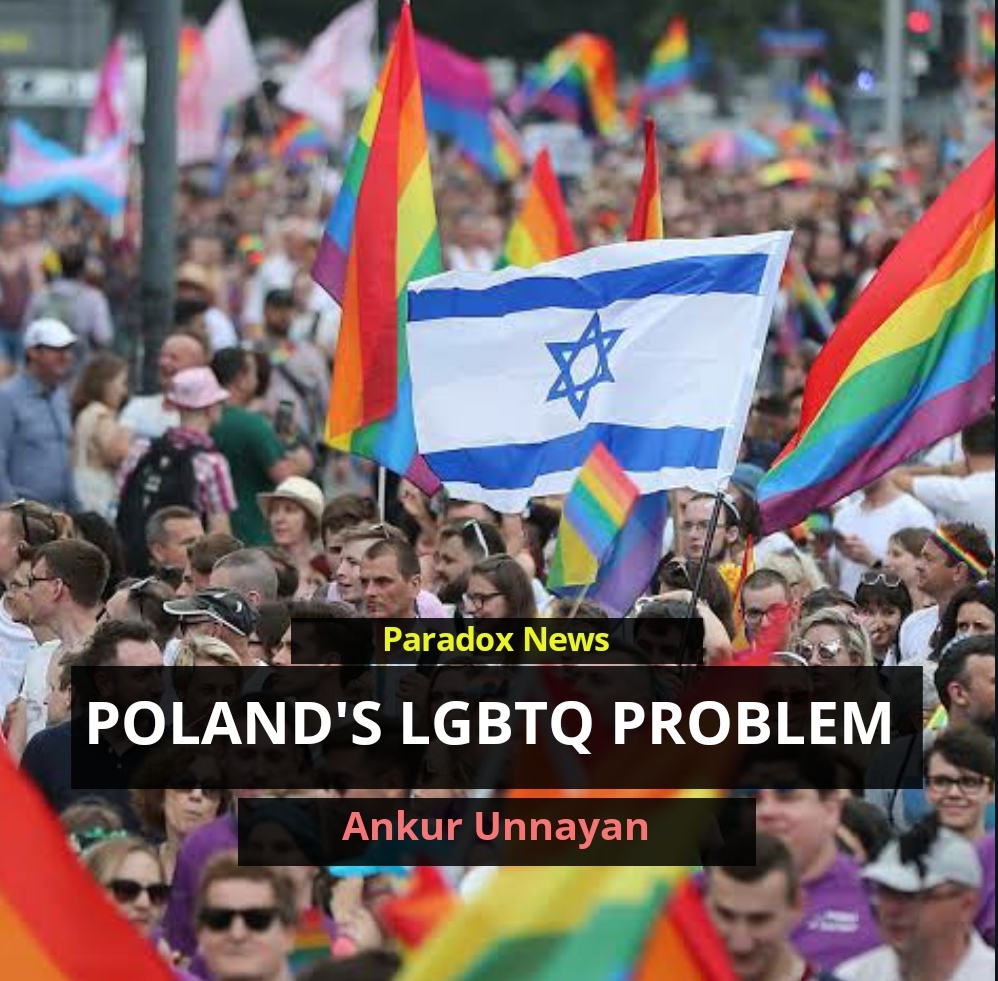
and 2001 was the year the first Pride Parade (Parada Równości) was held in Warsaw, attended by over 300 people. This was the first large-scale protest against homosexual discrimination.
While ahead of the 2015 Polish parliamentary election, the ruling Law and Justice (PiS) party took an anti-migrant stance, in the run-up to the 2019 Polish parliamentary election the party has focused on countering Western “LGBT ideology”. Several Polish municipalities and four Voivodeships made so-called “LGBT-free zone” declarations, partly in response to the signing of a declaration in support of LGBTQ rights by Warsaw mayor
Rafał Trzaskowski.
In August 2019, multiple LGBT community members have
stated that they feel unsafe in Poland. Foreign funded NGO All Out organization launched a campaign to counter the attacks, with about 10,000 people signing a petition shortly after the campaign launch. 2019 saw a rise of
violence directed against Pride marches, including the attacks at the first Białystok Equality March and a bombing attempt made at a Lublin march, stopped by the police. While back in 2020 there has been a lot of political uproar during the ongoing episode. Three people accused of
hanging LGBT rainbow flags off statues in Warsaw have been arrested and charged. Polish police charged them
with desecrating monuments and offending religious feelings. Activists protesting against the anti-LGBT policies of President Andrzej Duda hung the flags off statues of Jesus Christ, the astronomer Copernicus and the Warsaw mermaid.
They also dressed them in pink face masks bearing the anarcho-queer symbol.
Prime Minister Mateusz Morawiecki denounced the activists, saying the statues symbolise values that are
important to millions of Poles.
Some of the of Polish opposition MPs wore the rainbow colors of the LGBT flag in protest against President Andrzej Duda at his swearing-in ceremony on Thursday. While some opposition leaders chose to boycott Duda’s inauguration, other MPs attended, wearing rainbow masks
and bright colors to express their support for Poland’s LGBTQ community, whom Duda actively campaigned against.
In a campaign speech in June, Duda called LGBTQ rights an ideology “more destructive” than communism, prompting allegations of discrimination and hate speech from various international bodies, including the European Parliament.
Duda’s reelection bid has centered on “family rights and values,” and the belief that LGBTQ ideology undermines
traditional family roles between men and women.
When there is huge uproar related to the LGBTQ community a lot needs to be done and Poland will see the test of the time.

-

 Entertainment6 years ago
Disha Patani is a National crush and Why?
-

 Paradox recommends6 years ago
WAJID KHAN song list forever in heart and on the playlist
-

 Interview6 years ago
Madhura Joshi Divekar tells us her story, passion and more.
-

 Entertainment5 years ago
Best bollywood villains of 90s and the iconic actors.
-

 Food6 years ago
Terrace Farming- A clever way to grow greens.
-

 Interview5 years ago
Tirth Parsana: one who gives a laughter pill
-
 Business6 years ago
Elon Musk : undaunted visionary character shaping our future
-

 Paradox recommends6 years ago
Top webseries you must watch.
-

 Fashion6 years ago
SABYASACHI LEHENGA : A dream of every girl.
-

 influencer stories5 years ago
Neha Kulkarni who does Nasti Uthathev!